Kilkenny in a Day
Ninety minutes southwest, Ireland’s best medieval mile runs castle to cathedral — the Butlers’ seat sold to the town for fifty pounds, a round tower you can still climb, and a 1324 trial the city tells straight.
The short version
- Irish Rail runs Dublin Heuston to Kilkenny in about ninety minutes at intercity fares — irishrail.ie — with the castle fifteen minutes’ walk from MacDonagh station along the Medieval Mile’s spine.
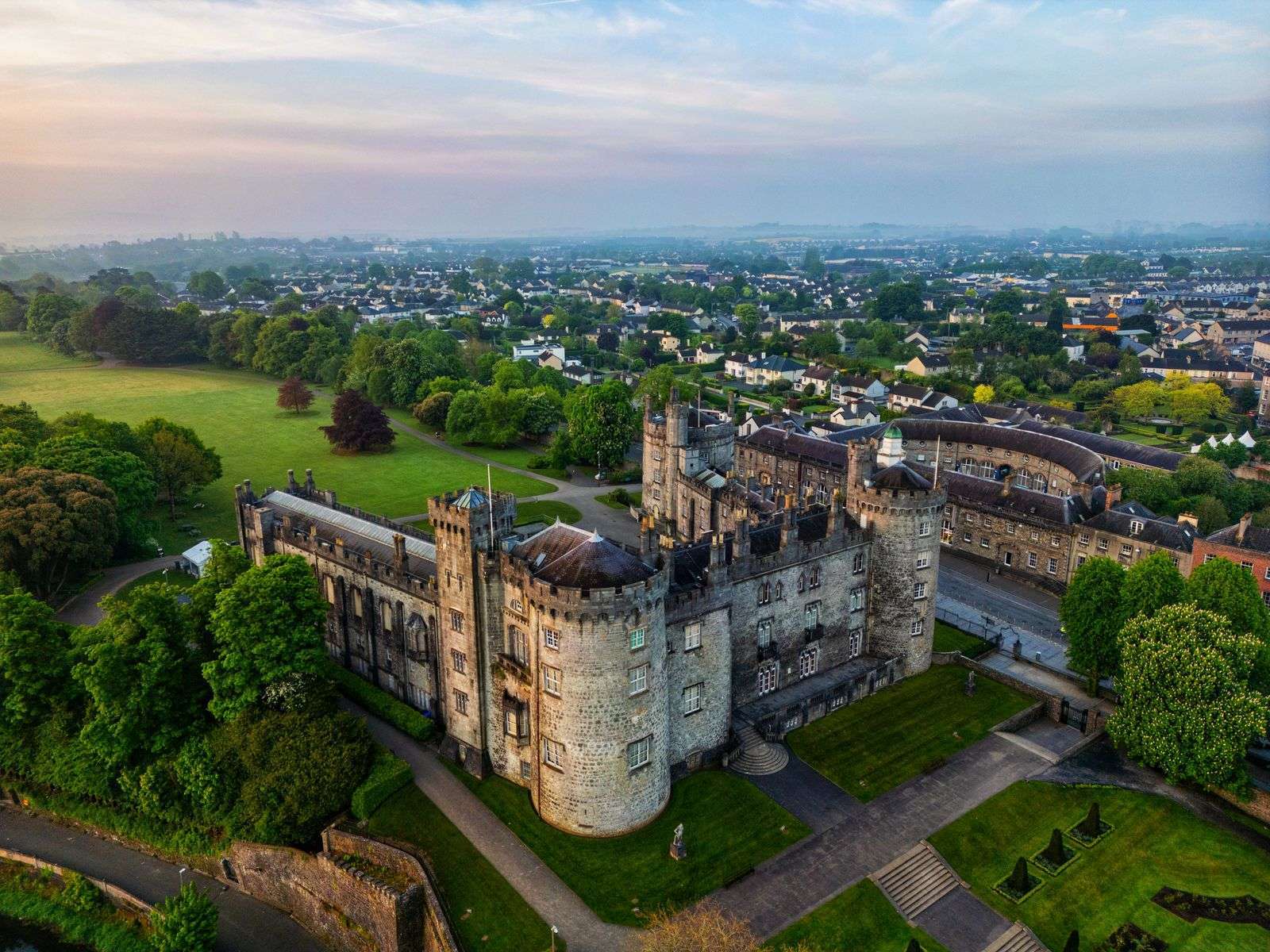
- Kilkenny Castle anchors the mile: the Butler family’s seat for nearly six centuries, remodeled from Norman keep to Victorian stately home, and sold to the town in 1967 for a token £50 — the fact the alarm leads with, and the guides confirm with relish; entry runs around the €8 mark with the restored Long Gallery as the headline room and the parkland free.
- St Canice’s Cathedral holds the alarm’s climb: the 9th-century round tower beside it is one of only two in Ireland still open for the ascent — steep internal ladders, a small fee, and the medieval city mapped below; details at stcanicescathedral.ie.
- The Kyteler story is told straight per the alarm: Alice Kyteler, a wealthy moneylender, was condemned in Ireland’s first witchcraft trial in 1324; she escaped abroad, and her servant Petronilla de Meath was flogged and burned in her place — the first person burned for heresy-witchcraft in Ireland. Kyteler’s Inn trades on the name; the history under it is the servant’s, and the town’s telling keeps her in it.
- Smithwick’s — brewing in Kilkenny since 1710 on a monastic brewing site older still — runs its visitor experience on the original St Francis Abbey grounds, tour tiers ending in the taproom per the alarm’s closing clause.
- The mile’s supporting cast: the Black Abbey’s Dominican Gothic, Rothe House’s merchant complex, the Medieval Mile Museum in the old St Mary’s, the design-craft economy the city built its modern name on, and hurling as the local religion — the Cats’ stripes explain themselves on match days.

Getting there
The Heuston train’s ninety minutes plan themselves — a handful of daily departures each way, so photograph the return timetable per this network’s standing habit. The city compresses beautifully: station, castle, mile, cathedral in one walkable line, with nothing needing wheels. Festival weekends (comedy in June, arts in August, Savour food in October) fill trains and beds — book the day around them knowingly or aim between.
The day
Castle first at opening: the Long Gallery’s painted roof and Butler portraits, the £50 sale story delivered by guides who never tire of it, and the parkland’s free acres framing the river front. Then the mile northward at strolling pace — Rothe House’s courtyards, the Medieval Mile Museum’s carved tombs and city treasures, the Black Abbey’s rose window — to St Canice’s: the cathedral’s monuments hour, then the tower’s ladders per the alarm for the rooftop geography lesson. Lunch lands mid-mile, castle-café to gastro-pub by budget. The afternoon takes Smithwick’s booked tour — the abbey well, the brand’s three centuries, the taproom ending — and the Kyteler’s Inn stop taken with the alarm’s register: a drink in the storied rooms, the 1324 facts held straight, Petronilla’s name remembered over the marketing’s. The evening train home runs from a station five unhurried minutes from the last pint.
When to go
Kilkenny runs year-round on stone and interiors, with the festival calendar as the multiplier: the Cat Laughs comedy festival (June bank holiday), the Arts Festival (August), and Savour Kilkenny (October) each transform the city’s density and its accommodation math. Summer runs the castle parkland and mile at full stride; December dresses the mile in its Yulefest layer. Hurling championship days paint the town in amber and black and empty it toward Croke Park — a spectacle in itself if your date collides.
Frequently Asked Questions
Why was the castle sold for £50?
By the 1960s the Butlers could no longer sustain it; Arthur Butler sold the castle to the local Castle Restoration Committee in 1967 for a token £50 so the town, and then the state, could save it. The price was symbolic, the transfer real, and the restoration since is what you tour. The guides tell it as the city’s proudest bargain.
What actually happened in the Kyteler trial?
Bishop Richard de Ledrede prosecuted Alice Kyteler — four husbands, much wealth, many enemies — for witchcraft in 1324, the first such trial in Ireland. Kyteler used her connections and fled, likely to England; her servant Petronilla de Meath was tortured, confessed under it, and was burned publicly in Kilkenny. The town presents the history plainly alongside the inn’s branding, per the alarm’s not-cutely register.
Is the round tower climb safe for anyone?
It’s steep internal ladders in a 9th-century shaft — fine for able adults and supervised older children, plain about excluding vertigo, small spaces, and unsteady knees. Weather closes it on the day when needed. It’s the rare Irish round tower you can enter at all, which is the whole point of the alarm’s clause.
Is the Smithwick’s tour just a marketing hour?
It’s brand-forward but grounded — the site brewed monastically centuries before 1710, the abbey ruins and well are real, and the storytelling handles the Guinness-era and revival chapters honestly. The taproom pour is fresh and the red ale argument settles best there. Beer-indifferent visitors can trade it for a second museum without loss.
Kilkenny or Glendalough from Dublin?
Glendalough (documented on this network) for monastic valley and mountain walking; Kilkenny for a living medieval city with roofs, pints, and rain immunity. Landscape versus streetscape — the forecast is the honest tiebreaker, and the train makes Kilkenny the logistics winner on any wet week.